A Calm Energy Check for a Room You Use All Day
A calm energy check helps you notice when lights, screens, and everyday devices are in use, so you can understand a room’s routine without measuring.
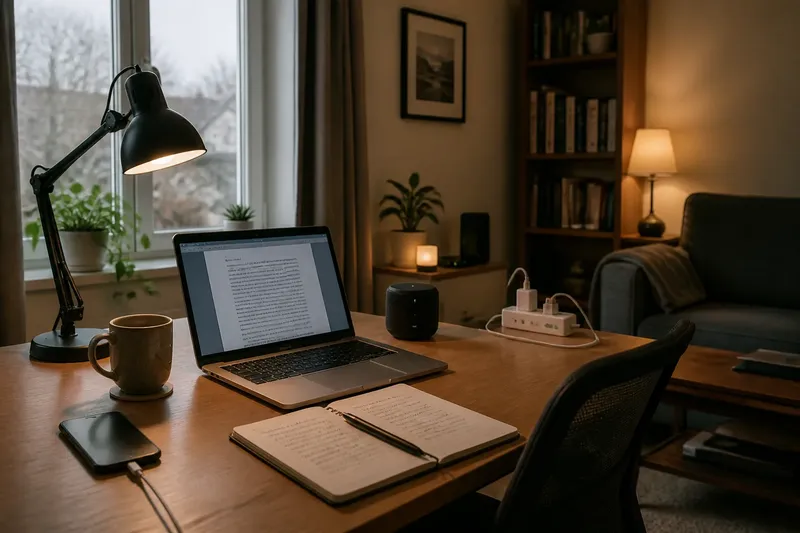
A calm energy check can start at the desk where a monitor glows beside a mug, while a lamp, phone charger, and small speaker share the same room. Rather than trying to calculate electricity use or change anything, spend a little time noticing what is on, when it is on, and what job it is doing.
The point is to make an invisible routine easier to see. A room’s energy use is not a single event; it is a pattern woven through work, rest, daylight, and brief moments when nobody is paying attention. Observation alone can clarify that pattern without turning the exercise into a test of willpower.
Notice the room as a sequence of moments
Pick a room you use through much of the day, such as a home office, kitchen, or living room. Choose a stretch that resembles your usual routine, not a special occasion. You do not need to watch continuously: a few natural pauses, such as arriving, taking lunch, and leaving, can reveal changes in what is running.
At each pause, look around and note three things: what is active, what is waiting, and what seems to be off. A screen displaying a document is active. A printer that is idle but still ready is waiting. A ceiling light that is dark is off. These are descriptions, not judgments about what should be changed.
Include the people and daylight in the scene. A lamp may be on because a cloudy afternoon has dimmed the room, while a screen may remain active because someone is reading from it. The same device can serve different purposes at different times, so context makes the observation useful.
Separate a device’s state from its purpose
It helps to distinguish what a device is doing from why it is there. A laptop may be in use for a video call, left open while its owner steps away, or asleep between tasks. A charger may be connected to a phone, or plugged in with nothing attached. Those situations look similar at a glance but describe different routines.
For a simple note, make two columns on paper: “what I see” and “what it seems to support.” Write “monitor on” in the first and “editing a document” in the second. If you cannot tell why something is on, leave the purpose blank rather than guessing. That small restraint keeps the record grounded in what is observable.
Say you use a living room for reading in the morning and video calls later. In an invented example, you might note the reading lamp on beside a book, then later record a laptop, desk lamp, and headphones in use for a call. The expected observable result is a short description showing that the room’s active devices change with its purpose, not a claim about how much electricity either activity uses.
Follow the handoffs that keep a room running
Many devices become noticeable at transitions: when someone enters, shifts tasks, leaves for a break, or finishes for the day. Watch those handoffs. Does a lamp come on as daylight fades? Does a screen stay awake after a meeting? Does a fan run only while someone is working nearby? A transition can explain a device’s presence better than a snapshot can.
Some activity is easy to miss because it happens in the background. A router may keep a connection available, a clock may show the time, and a speaker may wait for a command. You do not have to identify the internal operation of each device. Simply note that it remains on or ready, and avoid treating an unfamiliar light or sound as evidence of a particular energy draw.
Also notice shared equipment. A printer, charging station, or floor lamp may serve several people, even if one person happens to be in the room when you look. If the reason is unclear, write “shared” or “unknown.” The goal is to describe the room’s routine, not assign responsibility.
Keep a light-touch record
A paper note, pocket notebook, or basic notes app is enough. Use ordinary labels and brief phrases rather than technical readings. You might record “morning: window bright, overhead light off, laptop on” and “late afternoon: desk lamp on, laptop asleep, phone charging.” A few entries can show which changes follow the day’s rhythm.
- Record the time of day in broad terms, such as morning or evening.
- Note whether daylight is bright, dim, or blocked by curtains.
- List visible devices as active, waiting, or off.
- Add the apparent purpose when you can see it, such as reading or a call.
- Mark uncertainty plainly instead of filling gaps with assumptions.
Keep the notes descriptive. Avoid turning them into a score, a tally of “good” and “bad” choices, or a promise that a particular change will save energy. This exercise does not measure consumption. It helps you notice which devices are part of a task, which support the room in the background, and which simply remain present between activities.
What can a room observation tell you?
Can I tell how much electricity a device uses by looking at it?
No. A glowing display or a warm enclosure does not provide a dependable reading of electricity use. The observation can show when a device is active or waiting, but energy use requires appropriate information or measurement beyond this exercise.
Should I include devices that stay on in the background?
Yes, if you can see that they are on or ready, but describe that state without guessing what it consumes. Routers, clocks, and connected speakers may support tasks that are not obvious from the room itself.
What if my routine changes from day to day?
That variation is part of the picture. Note the difference between, say, a workday and a day spent mostly away, instead of forcing them into one average routine.
Do I need to switch anything off during the check?
No. Leave the room as you normally use it and observe. If you later consider changing a device’s settings or use, follow its instructions and take account of anyone who relies on it.
Let the observation stay useful, not demanding
A good energy check is brief enough to fit around ordinary life. If tracking every plug and minute starts to feel burdensome, return to a few natural pauses and the clearest patterns. You may notice that daylight changes how you use lamps, that one screen supports several tasks, or that a device stays ready during breaks. Each is a useful observation, even without a proposed fix.
Keep the notes for your own understanding, and treat them as a snapshot rather than a verdict on the room. A calm energy check earns its name when it leaves you with a clearer picture of the everyday rhythm—and the freedom to decide whether that picture calls for any further attention at all.