The Heat Pump Myth: Moving Heat Is Not Making It
Understand the heat pump myth: learn how refrigerant moves heat indoors, why the system uses electricity, and what cold outdoor air changes.
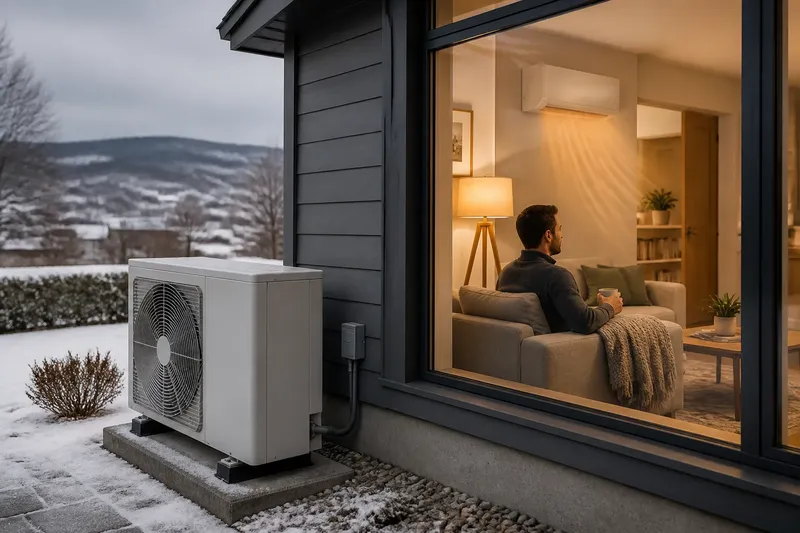
On a chilly morning, a heat pump’s outdoor unit hums while warm air reaches the living room. The heat pump myth says the machine must be making warmth from nothing. In fact, it moves heat already present in outdoor air, the ground, or water, using electricity to drive the transfer.
That distinction explains what a heat pump does and what it does not do. Its refrigerant loop carries heat from a source to the indoor space; electricity powers the equipment that makes that movement possible.
A heat pump moves heat from a colder place to a warmer one
Heat naturally flows from warmer things toward cooler ones. A hot mug warms the air around it; a warm hand loses heat against a cold window. For heating, a heat pump collects heat from a cooler source and delivers it to a warmer indoor space.
That transfer takes work. Electricity runs the compressor and other components, helping move heat against its natural direction. The electricity is not converted directly into all the heat delivered to the room. It powers the movement of heat from outside to inside.
“Moving heat” is more accurate than “creating heat.” The pump gathers thermal energy from a source and relocates it while drawing electrical energy to operate.
Refrigerant carries heat through a changing cycle
Inside a heat pump, refrigerant circulates through a closed loop. Its properties let it absorb and release heat as pressure and temperature change. The same broad principle appears in refrigerators and air conditioners, though their operating goals differ.
- Absorb: In heating mode, refrigerant passes through an outdoor coil and takes in heat from surrounding air, ground, or water.
- Compress: A compressor squeezes refrigerant vapor, raising its pressure and temperature so it can release heat indoors.
- Release: The warmer refrigerant passes through an indoor coil and transfers heat to the building’s air or water-based heating system.
- Reset: A valve lowers refrigerant pressure, preparing it to absorb heat again as it circulates back to the source.
Refrigerant is not fuel being burned in the home. It is a working fluid that repeatedly carries heat around the loop. The compressor, fan, and controls need electricity, and the indoor fan helps distribute warmth.
Air, ground, and water can supply heat
Air-source heat pumps draw heat from outdoor air. Ground-source systems exchange heat with soil through buried loops, while water-source systems use a suitable water source. The equipment and installation differ, but the central idea is the same: collect heat in one place and deliver it somewhere else.
Cold weather does not mean there is no heat available. Outdoor air can feel cold to a person and still contain thermal energy a heat pump can collect. As the source becomes colder, extracting heat can become more demanding, and the system’s output or efficiency can change.
Ground and water temperatures may vary less than outdoor air in some settings, but those systems bring different site, design, and installation considerations. The right type depends on the building and its surroundings, not on a single universal rule.
Why does a heat pump use electricity if it moves heat?
Is electricity converted directly into heat?
Some electrical energy ends up as heat through the operation of motors and other components, but that is not the main explanation for a heat pump’s heating effect. Electricity chiefly runs the equipment that gathers and transports heat from the source to the indoor space.
Does a heat pump make heat from nothing?
No. Indoor warmth comes from heat transferred from outside, along with the energy used to run the system. “Moving heat” describes the process more accurately than “making heat.”
Can a heat pump work when outdoor air feels freezing?
Many air-source models can extract heat in cold weather, though their capacity and efficiency can change as conditions become more severe. Equipment design and the building’s heating needs determine how a particular system performs in a given climate.
Is a heat pump the same as a furnace?
A furnace typically creates heat by burning fuel or using electricity to heat air, then distributes that heat through the building. A heat pump primarily transfers heat from a source, although some systems may include backup heat when extra heating is needed.
Efficiency describes heat transfer, not free energy
People sometimes hear that a heat pump can deliver more heat energy to a room than the electrical energy it uses and conclude that it must break the rules of energy. It does not. The difference comes from heat collected outside: electricity runs the transfer, while the source contributes additional thermal energy.
Efficiency comparisons describe how much useful heat a system delivers relative to the energy it consumes under specified conditions. They do not claim that energy appears from nowhere. Results vary with outdoor conditions, system design, installation, and how the building is operated.
Imagine an invented situation: a small office has an older heating unit and replaces it with an air-source heat pump. The new unit uses electricity to run its compressor and fans, then collects heat from outdoor air and delivers it indoors. The expected observable result is warm air from the vents; the energy supply includes both electricity and heat transferred from outside, not electricity alone converted into all the warmth.
Heating and cooling use the same transfer principle
A reversible heat pump can change the direction of heat transfer. In heating mode, it moves heat into the building. In cooling mode, it carries indoor heat outside, much as an air conditioner does. A reversing valve changes the refrigerant’s path so the indoor and outdoor coils take on different roles.
The equipment is designed to move heat in a chosen direction. Changing that direction can warm or cool the building, and the system needs electricity in either mode.
Follow the heat to understand the heat pump myth
When someone says a heat pump creates heat from nothing, ask what energy sources are involved. Electricity powers the equipment, and air, ground, or water supplies heat that the system transfers indoors.
A heat pump does not violate energy conservation or make warmth from nothing; it uses electrical work to collect and relocate heat. That distinction also explains why outdoor conditions and system design matter.
For a home or building decision, compare the proposed system with the site’s heating needs and the manufacturer’s operating guidance. A qualified heating professional can explain how a particular installation is intended to perform in local conditions.